
Products
Face cushion: comfort during therapy treatments
Patient comfort is an essential part of any high-quality treatment. Proper facial support can significantly influence how a patient feels during therapy.
Patient comfort is an essential part of any high-quality treatment. Proper facial support can significantly influence how a patient feels during therapy.
During treatments, patients often lie face down, meaning their face rests in the face opening of the therapy table. Despite soft padding, the openings are standardized in shape — while our faces are not. Some people have longer necks, higher foreheads, fuller cheeks, or narrower face shapes. This can lead to:
A face cushion is a specially designed support placed on the breathing hole of a therapy table. Its main purpose is to:
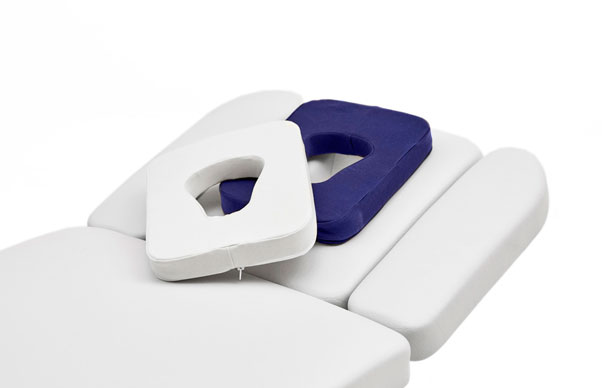
It is made of dual-layer memory foam. The highly elastic foam cells compress under pressure and slowly return to their original shape once the pressure is released. Thanks to its flexibility, it does not create counter-pressure. Additionally, it is temperature-sensitive and adapts quickly to body heat.
Using a face cushion in physiotherapy and other treatments provides even support and greater comfort for the patient. It gently conforms to the entire face, adapting to individual facial features without creating pressure. Comfort is ensured regardless of face shape or size. After prolonged time lying face down, patients may experience unpleasant marks from the face opening. The flexibility of memory foam helps prevent this.
As therapists in practice emphasize, proper facial support plays an important role in treatment quality: “In my work, I use a face cushion placed under the patient’s face when lying prone. I find it indispensable, as it relieves uncomfortable pressure on the face during cervical spine treatments.” Helena Novak, Physiotherapy Novak
A face cushion is ideal for anyone using therapy tables with a face opening:
A face cushion may be a small addition, but it can make a significant difference. By using a face cushion on a therapy table, you ensure better support, greater comfort, and a more professional impression, something patients quickly notice and appreciate.
